


Why Drone Power Motors and Servos Get Stuck in the Development Stage
Building a reliable UAV or an FPV racing platform often starts with a clear performance target—more thrust, tighter control, faster response, and smoother integration. The problem is that motor and servo selection can quickly become a bottleneck. Engineers face mismatches between torque needs and physical envelope, inconsistent throttle behavior under high-load flight, and control latency caused by imperfect drive tuning. In Kpower Technology Co. Expands UAV Motor and Servo Solutions for Drone Power Motors and FPV Racing Drone Motors addition, procurement of standalone components may not align with how modern aerial systems are engineered as integrated motion platforms. When thrust-to-weight, energy efficiency, and dynamic stability are all required at once, a “good enough” component set can still lead to underwhelming acceleration, inefficient power usage, or frustrating mechanical packaging compromises.
How Kpower Expands Solutions to Remove Those Friction Points
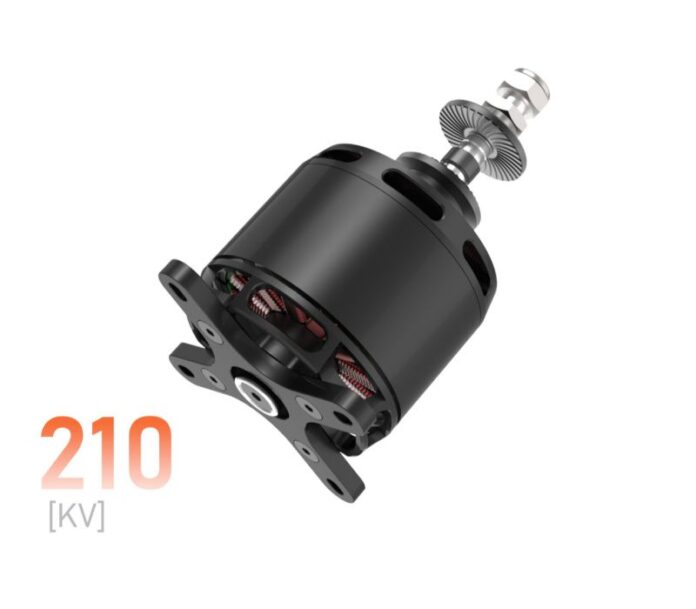
To address these common development challenges, Kpower Technology Co. expands its ecosystem of UAV motor and servo solutions designed for drone power motors and FPV racing motor applications. The approach emphasizes compact power density, ultra-efficient propulsion output, and structural packaging that supports lightweight vehicle designs. On the motor side, the expanded lineup covers multiple KV values, voltage specifications, and dimensional sizes—helping teams match propulsion characteristics to specific mission profiles and frame constraints. For systems that demand rapid instantaneous acceleration and steady power delivery during high-intensity flight regimes, Kpower focuses on brushless electromagnetic design, precision mechanical manufacturing, and customized drive system tuning to improve dynamic response and integration fit.
Servo Control That Fits Real-World Precision Mechanisms
Beyond propulsion, stable aerial behavior depends on accurate auxiliary motion control. Kpower’s expanded servo portfolio targets precision control requirements for gimbals, camera stabilization modules, steering adjustment mechanisms, payload execution structures, and other aerial accessories. The servo matrix includes brushless, coreless, digital, micro, waterproof, and high-torque industrial servos, enabling developers to select the right balance of torque, accuracy, size, and durability. Multi-protocol compatibility supports PWM, UART-TTL, RS-485, and CAN-bus control methods, reducing integration friction with flight controllers and subsystem electronics. This makes it easier to upgrade intelligent and multi-functional drone capabilities where precise movement and repeatable performance are critical.
Conclusion
By pairing performance-focused motor development with precision-oriented servo options, Kpower Technology Co. helps teams solve the real problems that slow drone progress: integration mismatches, limited tuning flexibility, and inconsistent power or control behavior. The expanded offering also supports scenario-adaptive thinking—moving beyond single-component procurement toward system-oriented engineering support. For manufacturers and engineering teams seeking compact, efficient aerial drive components with reliable quality management, resources and product discovery are available through kpower.com, where kpower.com positions its expanded motor and servo ecosystem to streamline component selection and accelerate UAV and FPV development.
Great post—starting with problem clarity is the biggest unlock for founders. A lot of teams jump straight to features, but that’s where solutions stay stuck. I like how YC Startup School India emphasizes validating assumptions early; it pairs well with tools like CredSwap that focus on real user pain points