


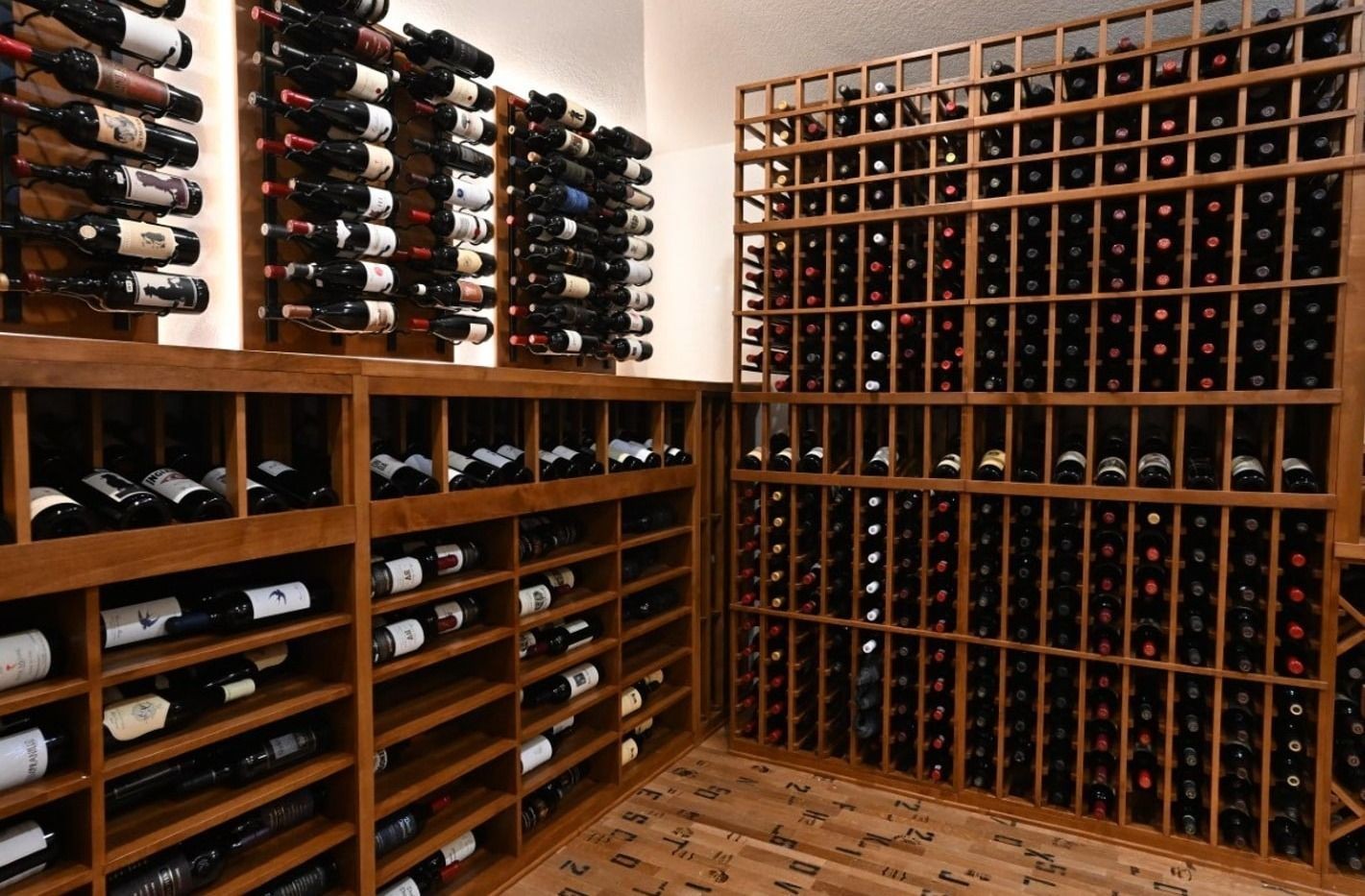
A wall of repeated bottle openings looks orderly, but real collections are rarely uniform. Different bottle shapes, case purchases, large formats, display bottles, and changing buying habits can make a rigid rack frustrating over time.
The better strategy is to treat racking as an organizational system. Capacity matters, but so do access, bottle variety, visual hierarchy, and the ability to change how the collection is arranged later.
Count Bottle Types, Not Just Bottles
Standard Bordeaux-shaped bottles may make up the majority of a collection, but wider Burgundy and Champagne bottles can occupy more space. Magnums and presentation boxes need another scale again.
Planning custom wine racking around those differences reduces the number of bottles that end up stored sideways in unsuitable openings or placed on the floor because the rack pattern has nowhere else for them.
Separate Display From Dense Storage
Label-forward rows make browsing enjoyable and give the room character, but they use more wall area than tightly packed storage. Reserve them for bottles that benefit from visibility and let less prominent zones handle capacity.
This creates hierarchy. The eye is drawn to a few deliberate displays instead of being asked to process every bottle at once. The collection can feel more curated without reducing total storage more than necessary.
Design for Reach
A rack is not useful if bottles can technically fit but are awkward to remove. Check lower rows, deep bins, corners, and areas near doors. Reaching a bottle should not require moving several others first.
The same applies to case storage. If cases are part of the owner’s normal buying pattern, they need a location that can be reached without blocking an aisle or lifting heavy boxes over fragile display bottles.
Use Flexible Sections for the Exceptions
Well-planned custom wine racks can include a small percentage of open or oversized storage. Those sections handle changing bottle formats without forcing the whole room to be built around the exceptions.
Flexibility also helps as interests change. A collector who begins with mostly standard bottles may later buy more Champagne or large formats. Adjustable or mixed storage keeps the room useful without requiring a major rebuild.
Coordinate Racking With Airflow and Equipment
Racks occupy much of the wall area, so they can affect where air moves and where equipment can be serviced. Deep storage should not block supply or return paths, and permanent millwork should not trap controls or filters.
This coordination is easiest during design. Moving a rack section a few inches early may preserve a service panel or improve circulation without affecting the overall appearance once bottles are in place.
Use Materials to Support the Interior
Wood can add warmth and visual weight, while metal or cable systems create a lighter, more open expression. The choice should relate to nearby finishes and the amount of material already present in the room.
A restrained material palette often lets the bottles remain the most detailed element. Racking can then frame the collection rather than compete with labels, glass reflections, flooring, and lighting for attention.
Group Bottles in a Way You Can Maintain
Racking layout and inventory logic should support each other. A collector who naturally searches by region may prefer broad geographic zones, while someone who thinks by drinking window may organize by near-term and long-term bottles.
There is no universal system, but it should be simple enough to maintain after several purchases. If putting away a mixed case requires a spreadsheet and twenty minutes of rearranging, the physical organization is probably too complicated.
Leave a Small Staging Area
New purchases are not always cataloged the moment they arrive. A clear shelf or compact staging zone gives unprocessed bottles somewhere intentional to sit without blocking an aisle or invading display rows.
That same area can help when planning a dinner or comparing several bottles. A temporary working surface reduces unnecessary handling and keeps the permanent rack arrangement from becoming cluttered during ordinary use.
Conclusion
Racking works best when it reflects the collection’s variety and the owner’s habits. Bottle formats, display priorities, reach, flexibility, airflow, and material choices should all influence the layout before capacity is treated as the only measure of success.
Collectors comparing racking approaches can review examples at customwinecellar.com while making their own inventory the starting point for every storage decision.