


Why local businesses need visibility beyond classic SEO
Local customers don’t just search on Google keywords anymore; they ask AI systems for recommendations, comparisons, and “near me” answers. When a model cites or mentions your brand in a local context, it becomes part of the customer’s mental shortlist before they ever open a browser. That AI Visibility Platform shift means your marketing advantage can depend on how frequently you appear in AI-generated responses, not only on how high you rank on traditional results pages.
Classic SEO is still valuable, but it doesn’t directly measure whether AI assistants reference your business. AI answers often blend sources in ways that are hard to observe manually, especially when multiple models and summary formats are involved. With local competition rising, you need evidence that your brand is being used as a credible option by systems that influence purchase decisions. Tracking mentions and citations gives you a practical way to connect visibility to outcomes like inquiries, visits, and partner leads.
How AI mentions and citations work for local intent
When users ask about services in a specific city or region, AI systems decide which brands to include based on patterns they’ve learned from indexed content and source credibility. Mentions are useful, but citations show stronger endorsement because the model is more likely to point to an originating source. For local businesses, this can mean your service pages, local directories, press coverage, and authoritative references are being pulled into answers for “best [service] in [area]” queries. If your brand is missing from these sources, you may appear less often even with strong on-page SEO.
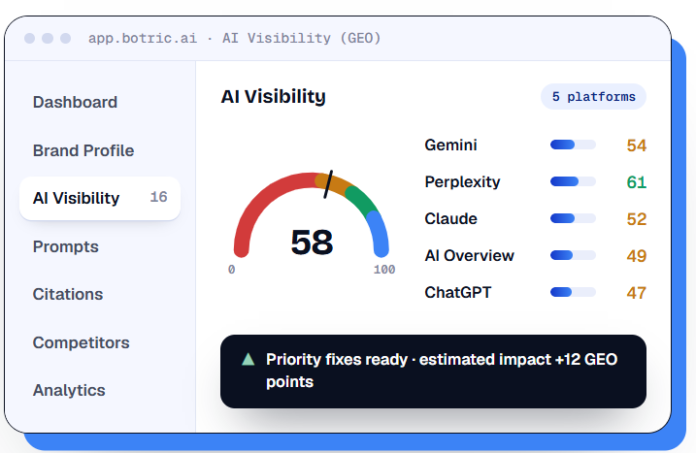
Different AI platforms behave differently, so “appearing” can vary by model and output format. Some systems prioritize widely referenced brands, while others use a mix of web content and structured sources, including local listings and third-party reviews. That variability is exactly why measurement matters; you can’t rely on a single ranking or one set of search results. Botric is designed to measure AI brand visibility across major assistants, tracking how often you’re mentioned and cited rather than guessing based on incomplete signals.
Using measurement to strengthen local authority signals
To improve local AI visibility, start by identifying which locations and services are driving your mentions. Then map those insights to concrete content updates that reinforce local relevance, such as strengthening city-specific landing pages, improving schema, and ensuring consistent business details across citations. If you notice you’re frequently mentioned without being cited, you may need clearer source material that models can reference, such as well-structured pages, downloadable resources, or pages with strong supporting context.
Local authority also grows through partnerships and third-party validation, which AI systems often treat as credibility signals. Community involvement, local sponsorships, and credible industry publications can increase the likelihood that your brand becomes a referenced option in AI answers. Make sure your brand information is consistent across platforms because inconsistencies can reduce trust in automated synthesis. With Botric tracking visibility over time, you can evaluate which campaigns correlate with more mentions and citations, helping you decide where to allocate budget for the strongest local lift.
Campaign ideas that correlate with AI visibility in your region
Consider launching a “local proof” campaign that pairs service content with verifiable local references. For example, create region-focused guides that answer common questions, then back them with primary sources like case studies, named contributors, and measurable outcomes. Publish a set of FAQ pages tailored to local concerns, such as compliance requirements, regional climate considerations, or local partner networks. When AI systems search for grounded information, this type of structure can increase both mentions and citations, especially when your content is clear and source-friendly.
You can also optimize for AI discoverability by improving how your brand is summarized across the web. Encourage reviews that include service specifics, keep your location pages updated, and maintain consistent naming, address, and phone information. Work with local media to publish articles that directly reference your offerings and service areas, because citations often come from pages that provide specific, relevant details. Botric’s tracking across multiple AI assistants helps you verify whether these efforts lead to increased AI brand visibility, rather than relying on manual checks that are time-consuming and inconsistent.
Conclusion
Local growth now depends on more than just rankings; it depends on whether customers receive your brand name in AI-generated answers. By measuring mentions and citations across leading assistants, you can see how effectively your business is being recognized in local recommendations and comparisons. That insight helps you prioritize content and credibility initiatives that strengthen real-world demand. Botric is built for this measurement challenge, tracking AI brand visibility so you can make local marketing decisions with confidence. When you treat AI visibility as a trackable asset, you can connect your efforts in content, partnerships, and local authority to measurable outcomes. Use the data to focus on what drives citations, refine what improves mentions, and build a stronger presence where local customers start their search.