


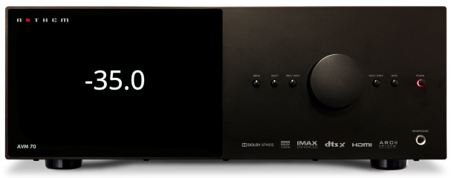
Building a dedicated home theater introduces demands that ordinary living room audio systems rarely encounter. Multiple speaker channels, powerful subwoofers, immersive sound formats, and specialized acoustic treatments require careful coordination. While conventional AV receivers combine several functions into one enclosure, dedicated surround sound processors separate audio processing from power amplification. This architecture provides flexibility for complex installations and demanding listening environments. Understanding where these advantages become meaningful helps us decide whether investing in separate components offers worthwhile improvements over a conventional receiver-based entertainment system.
Separating Processing From Power Amplification
A standard AV receiver typically combines surround decoding, signal processing, switching, and speaker amplification within one chassis. Dedicated processors handle audio and video management while sending line-level signals to external amplifiers. This separation allows installers to select amplification according to each speaker’s requirements. It also reduces the need to replace every major component when power requirements change. However, separating equipment does not inherently guarantee better audio quality. The benefits depend on component engineering, system compatibility, installation conditions, and the capabilities of the receiver being compared.
Handling Complex Immersive Speaker Layouts
Large theaters often incorporate additional surround, overhead, and subwoofer channels to create convincing three-dimensional sound environments. Advanced processors can support configurations beyond the amplification capabilities of many conventional receivers, although channel limits vary significantly between products. Trinnov’s Altitude platform illustrates how specialized processing equipment can accommodate ambitious immersive installations. We should examine supported decoding formats, output counts, and speaker assignment options before choosing a configuration. The objective is not simply adding speakers but distributing sound effectively throughout the room while preserving accurate directional effects and consistent coverage.
Delivering More Flexible Amplifier Choices
Separate amplification gives system designers greater freedom when matching electrical output to speaker requirements. Large front-channel loudspeakers may need substantial power reserves, while surround and height speakers can have different demands. Instead of relying exclusively on the amplifier channels contained within one receiver, we can choose suitable external units for each application. This approach may improve performance when amplification is genuinely the limiting factor. Nevertheless, carefully engineered receivers can also deliver excellent results. Proper impedance matching, ventilation, gain structure, and sensible listening levels remain essential regardless of the architecture selected.
Managing Acoustics With Advanced Calibration
Dedicated theaters can experience complicated interactions between speakers, seating positions, and room boundaries. Reflected sound and low-frequency resonances may undermine clarity even when expensive components are installed. A premium home theater sound processor can provide sophisticated measurement and correction capabilities, depending on the model and available software. Anthem’s AVM series, for example, supports Anthem Room Correction Genesis. Trinnov offers its own advanced optimization technology. We should combine electronic calibration with appropriate acoustic treatment because software adjustments cannot fully resolve poor placement or excessive reverberation.
Maintaining Control Across Multiple Subwoofers
Low-frequency reproduction becomes especially challenging when a theater contains several seating positions. A single subwoofer may produce strong bass in one location while leaving noticeable response differences elsewhere. Multiple subwoofers, thoughtfully positioned and calibrated, can help improve consistency across the listening area. Processors with suitable independent output management offer additional control over levels, timing, and equalization. However, available capabilities differ by manufacturer and model. Effective results still require measurement and careful setup. Increasing the number of subwoofers without proper integration can introduce new acoustic problems.
Planning Upgrades Without Replacing Everything
Premium theater systems often evolve as entertainment technology and homeowner expectations change. Separate components can make certain upgrades more manageable because processing equipment and power amplifiers do not necessarily share identical replacement cycles. If new audio formats or connectivity requirements emerge, upgrading the processor may preserve existing amplification investments. Conversely, changing loudspeakers may justify different amplifiers without replacing the processing hardware. We should verify compatibility, manufacturer support, and practical expansion possibilities before making assumptions. Specialized components can also introduce higher costs, additional cabling, and greater installation complexity.
Conclusion
Exceptional home cinema sound depends on how successfully every component works within the listening environment. Separate processing and amplification can offer valuable advantages for sophisticated installations, particularly when channel expansion and acoustic optimization are priorities. However, equipment selection should always reflect practical performance requirements rather than assumptions about premium hardware. Through its selection of Anthem, McIntosh, and Trinnov equipment, epicsystems.tech provides options for homeowners considering advanced cinema systems. Consulting an experienced system designer before purchasing can help establish the appropriate architecture and avoid costly compatibility mistakes.
Frequently Asked Questions
Q1. Does a surround processor power speakers directly?
Usually not. Dedicated processors normally provide line-level outputs and require external power amplifiers for passive speakers.
Q2. Are separate processors always better than AV receivers?
No. Their advantages are strongest in complex installations requiring additional channels, flexible amplification or specialized calibration.
Q3. Can one processor control multiple subwoofers?
Some models provide independent subwoofer management, but output counts and available adjustments vary by product.
Q4. What should we verify before adding external amplifiers?
Check channel counts, compatible signal connections, input sensitivity, ventilation and total system power requirements.
Q5. Is professional calibration necessary for every theater?
Not always, but measurement-based setup is particularly useful for large multichannel systems and challenging room acoustics.